The NSF COMPASS Center seeks to tackle the grand challenge of uncovering the genetic, molecular, cellular, and chemical rules of life underlying virus-host interactions. The center will achieve this goal through the development of Artificial Intelligence (AI), Machine Learning (ML), and biomedical technologies and integrating them with community-based and ethically grounded research.
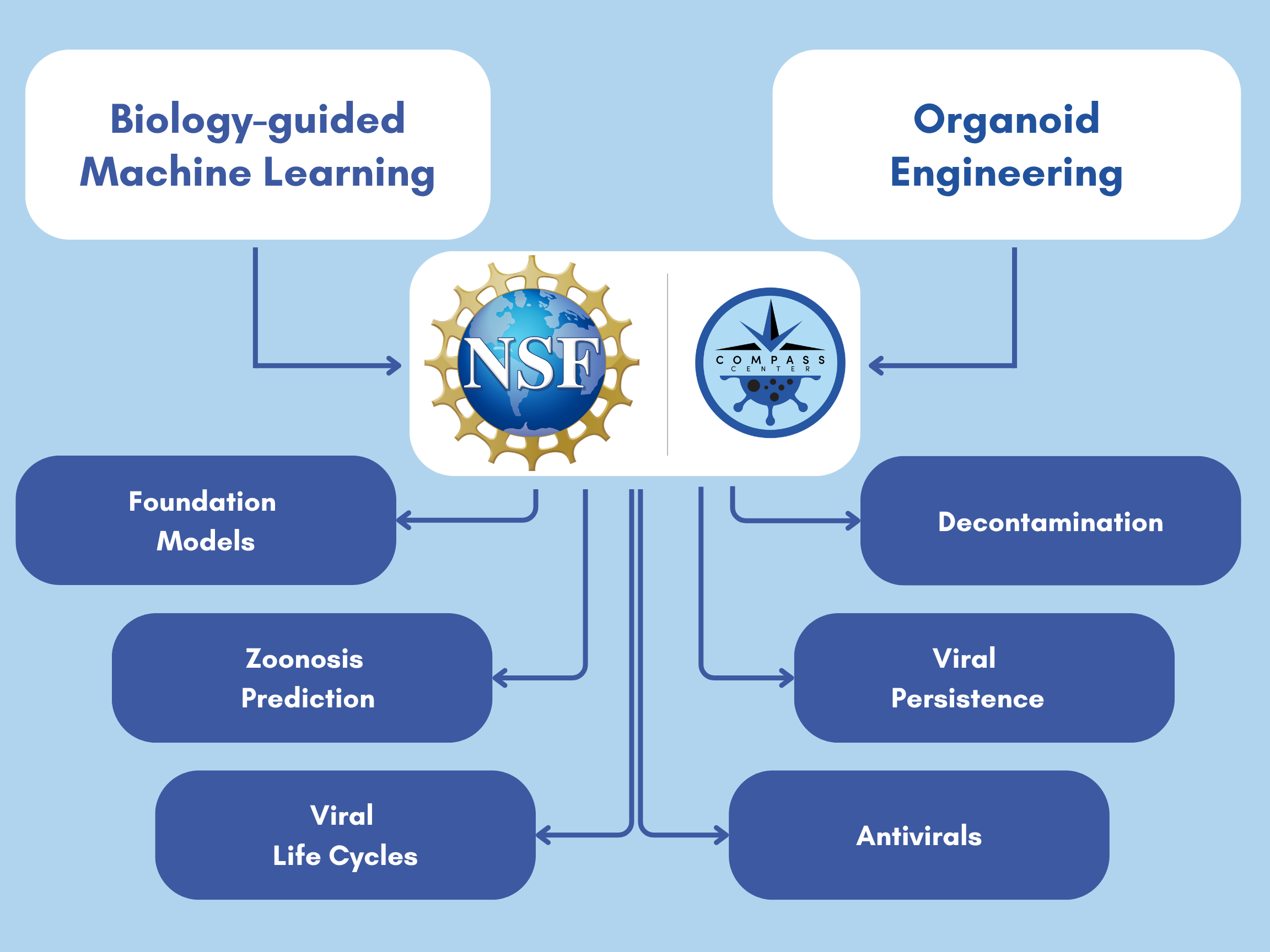
The emergence of AI/ML is transforming how scientists approach pandemic prediction and prevention, enabling more sophisticated and impactful analyzes of large and complex datasets. COMPASS researchers will create the first suite of foundation ML models that addresses how a virus may lower host barriers to infect a cell, how it persists in the environment, and how already-approved drugs may be reused to combat viral infections. The COMPASS Center will seek to rapidly build, thoroughly test, and broadly share novel and powerful foundation models.These efforts will take advantage of the relationships among the predictive problems that we will seek to solve in these thrusts.
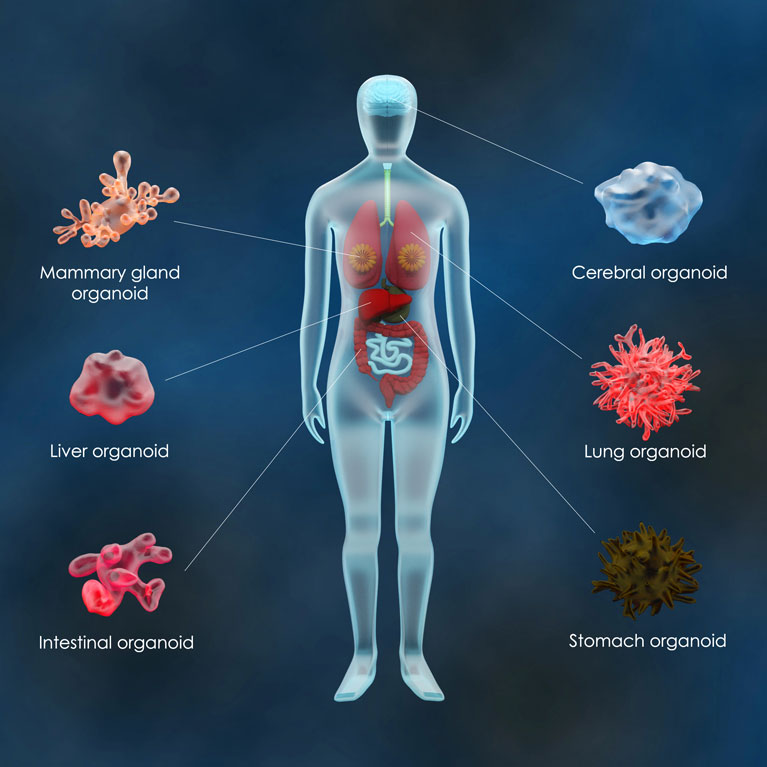
Organoids, which are miniature tissue structures derived from stem cells that mimic real human organs, play a key role in understanding disease development, therapeutics, and vaccines. COMPASS research will generate novel induced pluripotent stem cells (iPSC) based multi-tissue organoid systems. This research will serve as a robust platform to study viral life cycles and to test antiviral therapies, create novel methods for organoid engineering with fully differentiated iPSCs to test human susceptibility to viruses with pandemic potential, and design integrated multi-tissue organoid platforms to study viral infections.
NSF COMPASS will help prepare the next generation of researchers in pandemic science, working across four research thrusts.

Jump Thrust
The likely origin of new pandemic viruses is through the transfer (‘spillover’) of viruses from animals to humans followed by spread in humans. These viruses are called zoonotic. It seems likely that future pandemics will be of viruses not previously studied but similar to known and characterized viruses. It is challenging to identify the different possible pathways by which a specified virus can cause zoonotic infections and pose a serious threat of emerging epidemics or pandemics among humans. In the Jump thrust, our goal is to build machine learning (ML) models for pandemic prediction that integrate information about virus sequences and are scientifically guided by the knowledge of barriers to host shifts and emergence.
Replicate Thrust
All viruses depend on host cells for survival. However, the life cycle for a virus may not be completely understood since they are studied in two-dimensional cell cultures. An organoid is a miniature version of a complex tissue comprised of multiple cell types arranged in a three-dimensional (3D) architecture. COMPASS scientists will advance novel techniques to design organoids to dramatically improve our ability to investigate viral infections. Simultaneously, we will design innovative computational pipeline sto identify FDA-approved therapeutics that can be repurposed as antivirals and test their safety and efficacy in organoids.
Persist Thrust
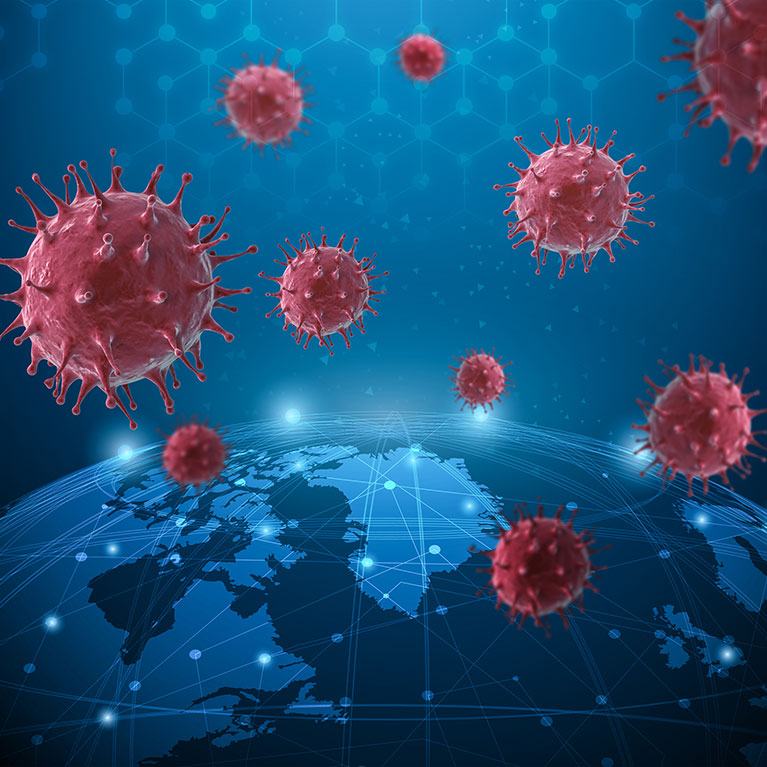
A key factor in the ability of a virus to spread rapidly is its stability in the environment, including air, water, and surfaces. A virus that “survives” (i.e., maintains infectivity) for long periods of time under a range of environmental conditions is more likely to seed and expand a pandemic compared to one that is more easily inactivated. Our goal is to develop fundamental ML methods to identify the viral and environmental drivers of inactivation, and predict inactivation rates of new viruses under a range of conditions. These models will be coupled with those from the Jump thrust to predict the persistence of viruses that we expect to emerge in humans.

Empower Thrust
Public health measures developed to predict and prevent pandemics will be effective only if the public broadly accepts and trusts scientific information. This thrust seeks to undertake the key principles of ethical design and empowerment in community-academic partnerships to improve equity in pandemic research and preparedness. We will accomplish this by learning about public perceptions of and needs related to issues in Jump, Replicate, and Persist and developing best practices for community-academic research in pandemic science.