2nd National Dialogue on Ethics and Pandemic Science
October 28 – 29, 2026
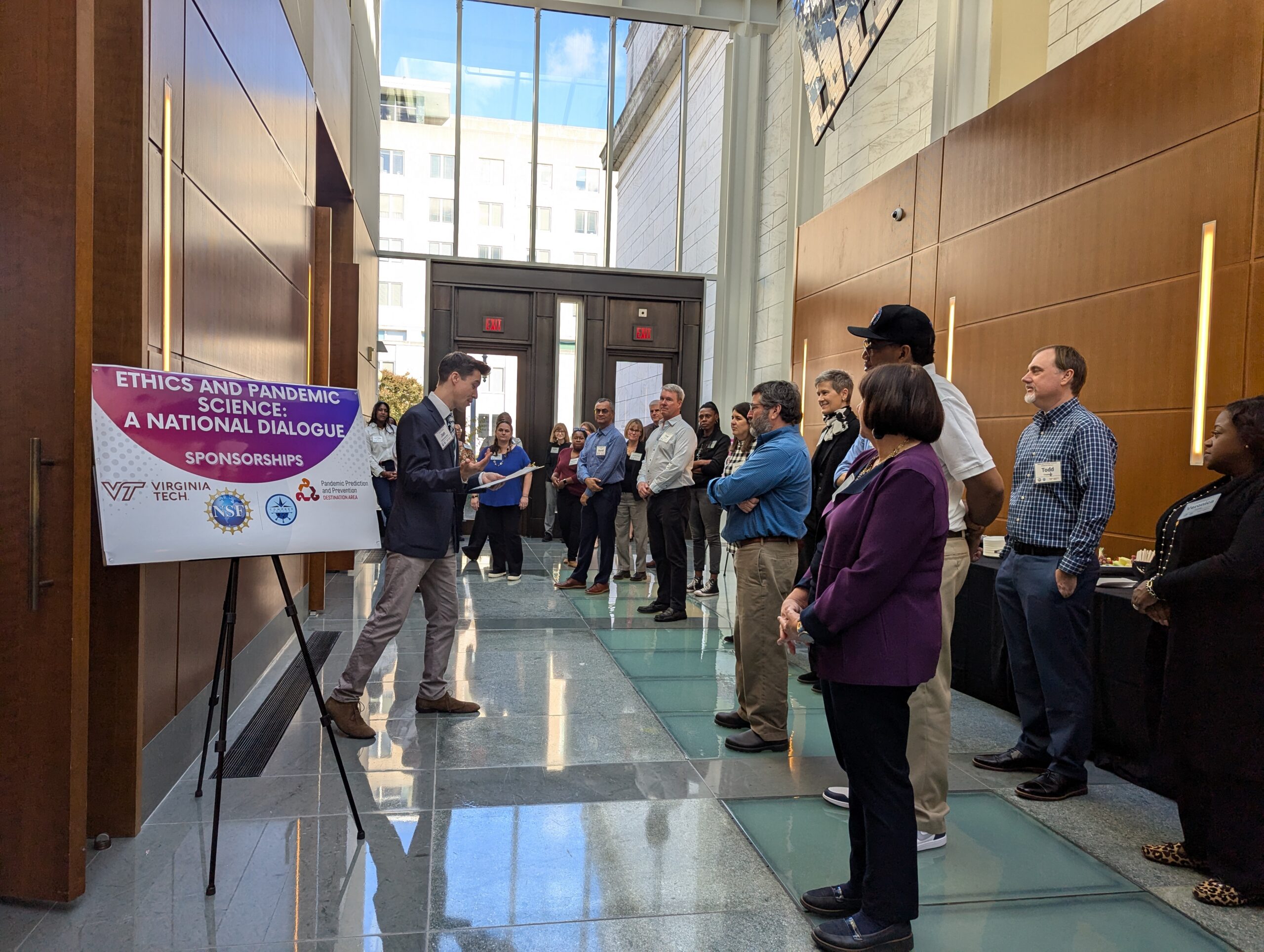
The United States National Science Foundation Center for Community Empowering Pandemic Prediction and Prevention from Atoms to Societies (US NSF COMPASS Center) is hosting the 2nd National Dialogue on Ethics and Pandemic Science. The 2026 National Dialogue focuses on the ethical dimensions of research about how pathogens that have the potential to cause a pandemic move from animals to people. Based on collaborative community engagement, this dialogue brings together affected communities, pandemic researchers, public health personnel, and policymakers to explore ethical considerations in research to predict the next pandemic.
Pandemic prediction requires innovative methods, including the use of machine learning and artificial intelligence. It also requires that we identify and address the many ethical questions that result. These questions go beyond following research regulations. They require us to think about a broader set of values and consequences across all aspects of the research process. Feedback and consultative engagement are integral to successful public health planning. During this dialogue, we will work with affected community members, public health experts, and pandemic researchers to draw lessons from pandemic modelling and understand community views about the impact of predictive modelling.
As such, this National Dialogue presents an opportunity for transparent and consultative engagement where different actors learn together. We hope that engaging in dialogue will help address some of the concerns highlighted above. Further, guided by public health values and principles, the National Dialogue represents an opportunity for collaboration, co-creation, communication, and co-designing for more effective pandemic preparedness.
About 60% of infectious human illnesses and more than 70% of emerging infectious diseases can be traced back to animals. Food products from poultry, beef cattle, hogs, dairy, and seafood have been found to pose a risk to humans based on prediction models that bring different concerns to different communities. Animal producers might be concerned about the moral and economic harm related to animal loss. Those who interact with wildlife ecosystems, on the other hand, might be concerned about the potential harms that could disrupt ecological balances. Public health personnel and policymakers who lived through the COVID-19 pandemic might be concerned about the disruptions similar outbreaks could cause. The National Dialogue is designed to help us answer some of these questions and help inform our research and policy approaches.
The National Dialogue provides space for community experts and researchers to share knowledge, identify ethical dimensions of research on how we predict future pandemics, and discuss the implications of pandemic research on affected communities. Confirmed dialogue participants include:
- Affected Communities – livestock producers, animal-based food processors, cooperative representatives, advocacy (animal welfare, human-wildlife interactions, and AI development and use) groups, and community members
- Pandemic Scientists and Researchers – pandemic scientists, AI, and machine learning researchers
- Public Health and Health Policymakers – public health authorities, policymakers, and research funding agencies
- Dialogue facilitators and planners – ethicists, community engagement specialists, and science communicators