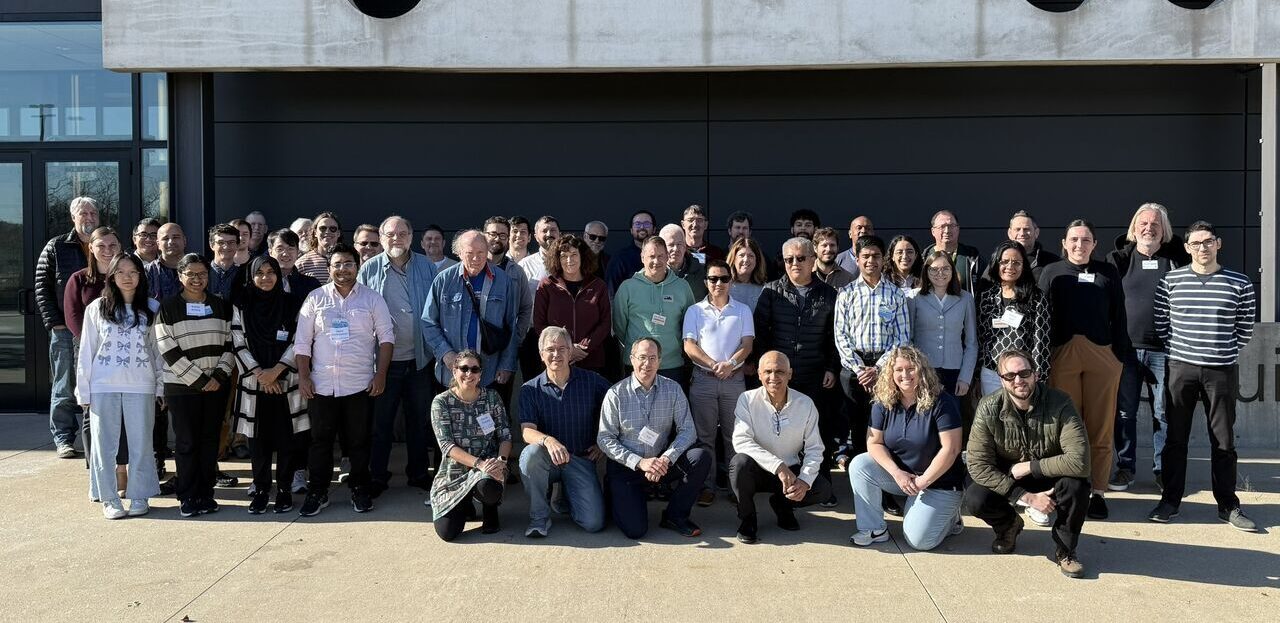
Graduate students Blessy Antony and Kateland Sipe attended the NIAID Bioinformatics Research Center AI Codeathon 2025, held November 12–14, 2025, at Argonne National Laboratory. The event brought together researchers, data scientists, and developers to collaboratively improve the FAIRness (Findability, Accessibility, Interoperability, and Reusability) of data and tools developed by NIAID Bioinformatics Resource Centers using artificial intelligence and large language models.
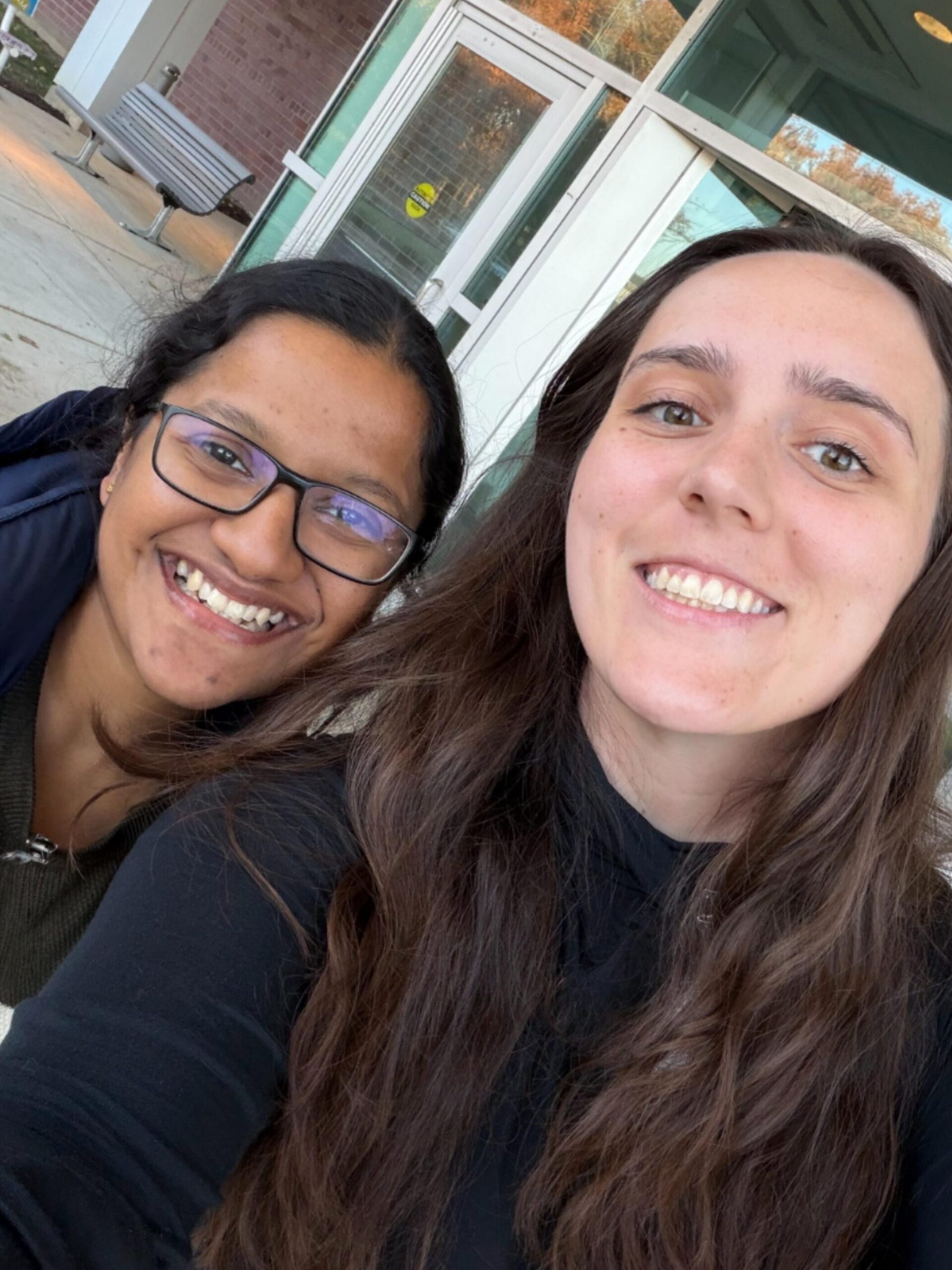
Blessy contributed to two projects, including ‘HiPerRAG for Literature-based Data Extraction on Priority Pathogens’ and ‘PubMed Miner: AI-Powered Sequence Feature Extraction from Literature’. Both projects were focused on using large language models (LLMs) to extract and curate structured biological datasets from scientific publications. Blessy used prompt engineering to facilitate the curation of mutations in Influenza A viruses when given a publication of interest. She also added a feature in the PubMed Miner tool to use LLMs to convert natural language queries to PubMed query syntax. “This experience was particularly valuable because it closely aligned with my Ph.D. research project and also led to a collaboration with the developer of HiPerRAG for integration into the VILLA project. Interacting and networking with the codeathon participants from different domains expanded my understanding of the varied applications of AI in infectious disease research,” Blessy said.
Kateland worked on the Viral Structural Phylogenetics project in collaboration with project leads from the University of Lausanne. This project aimed to utilize a protein language model for viral structure prediction and to validate using viral taxonomy. Kateland primarily aided in dataset curation for the validation framework for this project.
The Codeathon allowed Blessy and Kateland to learn how other researchers in this field are approaching similar problems and helped foster new connections and potential collaborations. “Overall, it was a rewarding experience to collaborate with a talented group of researchers on a problem that intersects closely with my own work in viral taxonomy prediction. Seeing how structural information can complement sequence-based approaches opened new perspectives, I hope to carry forward in my research,” Kateland adds.
Experiences like Codeathon highlight the importance of interdisciplinary collaboration in advancing research as new computational tools reshape how scientists approach complex biological questions.